
sass




Alex Sass
Digital and ecommerce strategic partner
Hello, I’m Alex.
I’ve spent about thirty years working across the visible internet, from early community platforms to modern ecommerce. Along the way I’ve done almost every part of it, SEO, paid media, brand, analytics, social, product and business planning, and eventually realised the problem was always treating them separately.
So now I just call it strategy. I’m hands on and very much a “do the things” chap rather than just an author of clever words.
I’ve owned agencies, built dot com businesses, raised investment and sold companies, while always staying hands on with campaigns, teams, teaching and doing the work itself. I’m as happy working behind the scenes as I am writing the big plans that help turn something small into something significant. I also know this is a tough space for founders, so I try to bring a steady, human touch to the process.
I’m usually brought in when a company already has something good but the online side feels heavier than it should. Activity exists, effort is high, yet decisions are unclear and growth unpredictable. I work alongside the founder and team to make it make sense again and turn activity into reward.
My work sits between human understanding and commercial reality. I help turn an idea into a clicks and a website into a reliable revenue engine while keeping customers, the business and the founder aligned.
The outcome is reliable profit, sustainable growth and a business that fulfils the founder’s original ambition. Often part of the work is uncovering what that ambition really is. Customer, owner and team need to move in the same direction, and helping them find that shared path is what I focus on.
Some businesses become global, others stay beautifully niche. Both are good outcomes. The goal is a business that works financially and feels right to run. Many clients have been with me for several years and I am thankful for their trust and genuine collaboration.
I’m generally described as curious, fast, available and a bit obsessed, and thankfully also someone people enjoy working with.
How I Help
I usually work with a company for a period rather than a one off project. Long enough to fix the foundations and short enough that the team can confidently run it afterwards. I can be (very) hands-on, producing and coordinating directly or more strategic, depending on the need.
Direction and investment
Defining the goal, mapping the options and guiding the decisions, across tech stacks, channels, campaign types and spend levels, so investment holds up commercially over time and culturally in the moment.
Brand, customers and growth
Clarifying what the brand truly means, building behavioural personas using proprietary tools and decades of research, and aligning messaging and channels so people recognise themselves in it and choose to join, not just buy.
Revenue and experience
Structuring the website and product journey as a commercial system, improving conversion, trust and repeat purchase so growth becomes predictable and scalable.
Team alignment
Teaching, sharing theory, workshopping together and aligning founder and team, drawing on my own award winning internal culture theories to build confidence, clarity and enjoyment in the work.
Experience
I’ve worked across the full lifecycle of digital businesses, from first idea to international scale, inside startups, agencies and established organisations.
My career began in the very early commercial internet, building marketing platforms and managing online systems for major organisations. I was recognised quickly for my theories of human connectivity and brand evolution. During the dot com period I moved into pure online communities and social platform engineering / commercialisation before such things became mainstream, helping develop early models for what we now know as social media.
I later led digital divisions and strategy inside agencies, delivering international campaigns and launches across consumer, lifestyle, health and technology brands. After that I founded and ran my own agency, scaling brands and maintaining long term partnerships under my own flag.
As a pivot, I created a funded ($1m) big-data venture studying human needs and values at global scale, producing the world’s largest human happiness study and building analytical systems used across healthcare and retail.
Today I work as Consulting Partner (set days per month) at a leading e-commerce agency, supporting leadership, major clients and startup projects while continuing independent work and teaching advanced digital marketing theory.
I continue to build small personal digital products for myself and take on direct clients and agency partners to stay close to the zeitgeist and to keep the noggin busy.
Direct projects, ventures and consulting
Government of Greenland
UK Government
Mayor of London teams
The Arts Council
The Department of Trade & Industry
JakeTM / Ivan Massow
lastminute.com
Economist.com
HotelTonight
Nokia (EU)
Prudential (UK)
HTC
Southbank Centre
Sirius IP
AutisticOrNot
Jabrock
Sorted
Meningitis Trust
Shakespeare Birthplace Trust
Brand and campaign work, agencies and partnerships
Converse
adidas
Under Armour
BMW MINI
Courvoisier
Red Stag / Jim Beam
European Space Agency
Meta (Facebook)
IBM (Watson)
Sony Playstation
Onitsuka Tiger
European Space Agency
Countless further wonderful clients, roughly 80% established and 20% startup'-mode. All work delivered either directly or while operating at apex agency leadership teams.
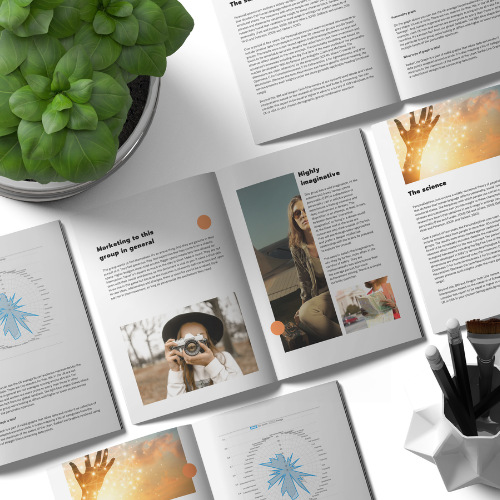
Behaviour, research and commercial modelling
Joules
KFC
Defected Records
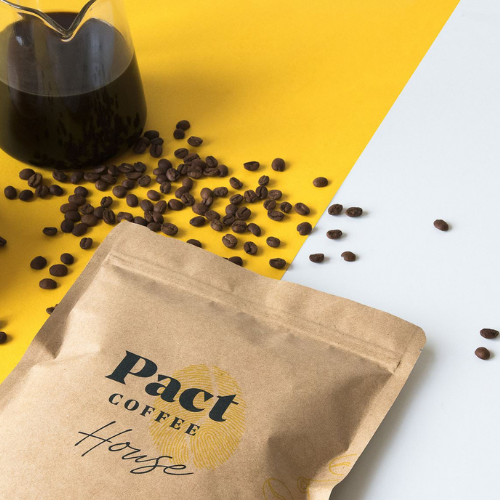
Pact Coffee
Bayer Women’s Healthcare
Co-op
Range Rover - Land Rover
Private VC´s (healthcare)
Seiko (indirect research)
Oregon Technology
ECRUBOX CLIENTS
(Consulting Partner & Innovations)
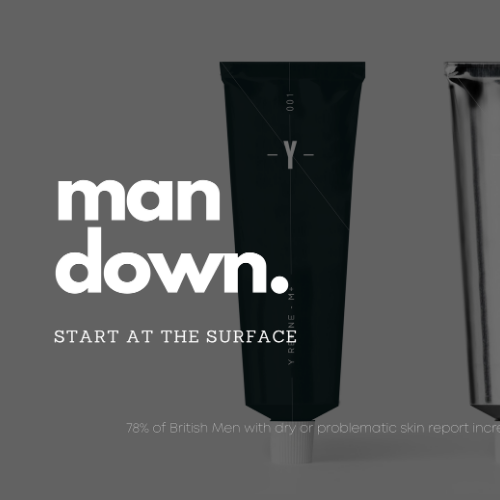
Kit & Kin
Multiple Retail Brands (global)
Co-op Energy, Broadband, Travel
Threshers
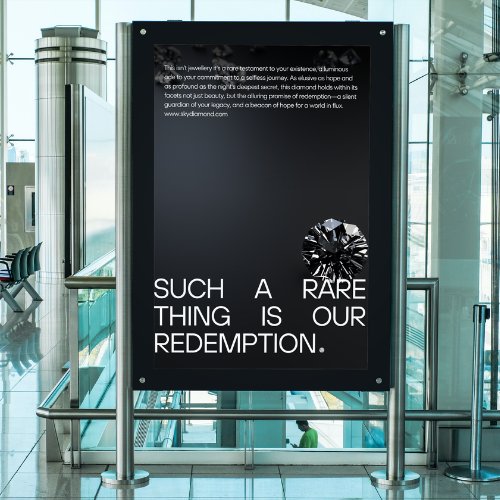
SkyDiamond
All accelerator - VIP clients
Clients / Projects / Agencies



























What my days actually look like
I like variety. I also like structure. Hyperfocus means I keep a routine, but what fills that routine changes constantly.
One day I might be deep inside a campaign selling cruise holidays. I am not only looking at the twenty images going onto Facebook, I am studying who we are speaking to and why they would care right now. I help shape the message, then brief the team or build on their ideas. It is small tactical work sitting inside a wider understanding of the client, who has usually already been through workshops with me and whose internal team shares a common language about customers and intent. A week later I step back in, review behaviour, and adjust.
Another day is a blank canvas. A startup launching a runway fashion line. Strong press presence, almost invisible online. Repeat buyers exist but the founder has little interest in technology. I will select the tech stack based on need, but my real focus is interpreting the brand into digital behaviour. Which channels drive conversion without putting pressure on the offline operation. Perhaps we introduce a gateway product and support it with research explaining the demand. We study the P&L, hand clear requirements to developers and I stay close for tone, experience and decision making.
Then there are long term clients. We know their rhythms now. We can predict peaks and troughs and have playbooks for launches and expansion. Suddenly social feedback turns strange. Something has shifted. This is detective work. I trace the source, identify who influenced opinion and assess the risk. Sometimes it leads to small changes, sometimes to reputation management. The PR team may step in, but often it ends with a few learnings and a couple of phone calls to calm an overlooked influencer.
Other days are rescue missions. Businesses dripping money on campaigns while beautiful websites barely produce profit. Everything comes back onto the table. I study the soul of the brand, the user journey, order the product myself and experience every communication. Where is the opportunity, where is the leakage, what should stop and what should begin. Clarity returns, and the work becomes rewarding again.
And occasionally there is space to pause. I gather the team and we look at how we actually work. Are we still hiring the right people? Is the opportunity we believed in a year ago still real today? What is the founder really worried about that nobody has said aloud? What could be simplified, automated or removed entirely? Where would their energy go if the noise disappeared? It usually becomes a tow-hall style conversation. My position, half outside and half inside the business, helps people speak honestly. We align and things improve, often without touching technology at all, just leaning on human experience and observation from years spent around similar challenges.
I genuinely love this work. In return I take every Monday off, watch familiar TV again, reset, recharge, and then send the invoice.

The weird and wonderful
I’ve always enjoyed using digital theory and technology to help people, sometimes by selling and delivering the things they genuinely love, sometimes by changing how we live alongside the internet itself. That has meant helping a national government apply behavioural thinking to protect mineral resources, supporting under represented groups in gaining fair access to ecommerce, hosting hundreds of real world community events around early social networks, contributing to legal change in online travel booking, analysing large scale social datasets to understand human happiness across countries and building early AI systems designed to reduce doom scrolling by separating signal from noise. Along the way I developed early commercial theories describing interaction between social profiles, worked around the edges of what became the largest professional networking platforms, helped agencies evolve into teaching organisations, supported the commercial launch of laboratory grown diamonds, contributed to public understanding projects connected to European space research and, more commercially, sold a great many football boots, shirts and handbags.
PS - Although most of my clients are based in the UK (and I operate as an extension of that working culture), having had most of my “growing up” in London, I now live in the Canary Islands, where I spent many years living and existing entirely off-grid. This longing for a unique connection to the world through connection and disconnection is reflected in my personal theories and philosophy of digital life. Read about my choice of location here.
Typical ways we start working together
Some companies want ongoing support straight away. Others begin with a focused piece of work so we both understand the opportunity properly.
Understanding the real customer
A deep exploration of who the customer actually is and why they decide, not just demographics but motivations, behaviour and attachment. Workshops included.
Usually around 10 working days.
Founder direction and business shape
Clarifying what the founder is trying to build and how it realistically happens. A human look at the team, the ambition, the market and the commercial path forward.
Usually around 15 working days.
From idea to digital business
Helping turn a concept into an operational online company. Product definition, customer matching, first journeys, initial channels and investment narrative.
Usually around 30 working days.
A note on how I work and autism awareness
I’m autistic, diagnosed late in life. For most of my life that just meant “the person who notices things a bit too much”, but it has turned out to be useful. I see patterns quickly, prefer clarity to performance and I’m reliably early to things. I take deadlines very seriously and tend to say exactly what I mean.
I’ve worked remotely for over fifteen years and rarely travel, although people are very welcome to visit me here in the Canary Islands if they want a few focused days together.
In the last couple of years I also launched a challenger project aimed at breaking barriers for highly skilled autistic adults who were missed by diagnosis in the 70s, 80s and 90s. What once felt like a difference is now very much a strength in how I work.
I’ve made many lifelong friends through this work and feel lucky to have been born at the moment this whole digital world came into existence. If you’d like to learn more about how your enterprise can accommodate brilliant autistic colleagues visit this page.
Personal Digital Philosophy Principle
SSS: Social, Spatial, Self, Alex Sass 1995-2026
Most digital problems are not technical problems. They are identity problems. Companies try to communicate, advertise and scale before they exist in a way people can instinctively understand.
In the late 90s, while building some of the earliest online communities, we learned something important. Platforms only grew when user profiles behaved like real people. When they had context, status and recognisable intent, relationships formed naturally and traction followed. When they did not, nothing worked for long, no matter how clever the features were.
From that came SSS.
A way to understand how humans relate to each other and therefore how they relate to organisations.
Social
For humans, social is position. It is not popularity, it is placement. People instinctively locate others in relation to themselves. Trusted expert, peer, aspirational figure, helper, outsider, authority. Every relationship begins by understanding the role the other person plays in our world. Comfort comes when the role feels stable and predictable.
For brands, social means deciding what role they play in a customer’s life and holding it. Many companies try to be premium, friendly, expert and disruptive at the same time. That creates hesitation. A strong brand is recognisable because people know how to use it socially. They know whether to rely on it, recommend it, learn from it or signal taste through it. Once that role is clear, marketing stops pushing and starts spreading through human behaviour.
Spatial
For humans, spatial is context. A person behaves differently at work, at home, in a hobby group or in a moment of vulnerability. Identity is partly defined by where interaction happens. It is also shaped by culture and geography. Humour, trust, aspiration and politeness change between places. Relationships feel natural when they match the environment and uncomfortable when they ignore it.
For brands, spatial means belonging somewhere specific in life rather than everywhere on the internet. Channels are not just distribution, they are environments. Search is intent. Social media is signalling. Email is permission. Physical product is ritual. Geography and culture matter just as much as platform. A brand accepted in one place may feel strange in another, and a tone that works in one culture may fail in the next. When a company understands the situations and cultures in which it fits, customers accept it. When it appears in the wrong moments or places, even good messaging feels intrusive. Spatial clarity guides channel mix, localisation, product design and expansion decisions all at once.
Self
For humans, self is the combination of what we choose and what we inherit. Personality, needs and values sit alongside background, temperament, politics and even silence. People communicate as much through what they refuse to engage with as what they express. Trust forms when those signals stay coherent over time. We do not need to agree with someone to feel safe around them, we just need to understand them.
For brands, self is the deliberate selection of attributes and the discipline to live with the consequences. What you stand for determines who feels welcome and who does not, and both matter. Many companies try to avoid this tension and end up forgettable. The strongest brands accept it and become meaningful. Customers recognise shared needs and values and begin to attach identity to the relationship. At that point loyalty stops being transactional and starts becoming cultural. Brands do not plan to become cults, they become them when their behaviour consistently reflects a recognisable self.
When Social, Spatial and Self align, connection forms naturally. Growth then becomes a result rather than a target. My work is usually to help a company discover and hold that alignment so its behaviour makes sense to humans, both outside and inside the business.

Advanced Digital Teaching and Strategic Direction
Soul of the Brand and Ecrucademy
I was invited into a very successful ecommerce agency with an unusual brief: do anything you want. They had followed my work for years and felt the business did not need more services, it needed sharper understanding.
The clients were already performing well. Digital ROI was strong, often excellent. Campaigns worked, dashboards looked healthy and growth targets were being met. But the organic attachment to the brand at street level was harder to explain and even harder to steer. The businesses were efficient, not always loved. They needed some heart.
This was not a typical agency. It already had what most promise but few truly possess, a full circle offer, development, SEO, PPC, social and strong commercial leadership in one place. Yet many founders, often already spending close to a million a month, were still missing the deeper outcome. Growth depended on buying attention rather than earning attachment. Loyalty was fragile, expansion uncertain, and customer behaviour rarely instinctive. The brand converted, but it did not quite live in people’s lives.
Rather than add another channel or tactic, I built a framework designed to pause activity and define meaning. Soul of the Brand became a structured process to identify the real opportunity between a company and the humans it serves. Not just what the founder believes the brand is, but what the market is ready for, what customers need to hear, and what the business must become to deliver it truthfully.
The work combined workshops, behavioural surveys, persona modelling, internal interviews, decision psychology and commercial analysis, producing a single positioning document that acted as a compass across product decisions, hiring, partnerships, campaigns and investment. Founders valued it because it removed noise, teams valued it because decisions stopped changing weekly, and customers valued it because the brand finally behaved consistently. Almost every time the impact reached beyond marketing. Products evolved, messaging simplified, advertising sharpened and spending became more confident because growth was now coherent rather than tactical.
Delivering this repeatedly revealed another truth. The framework only worked fully if the people inside the agency understood the reasoning behind it. So I began teaching the thinking itself, which became Ecrucademy, an internal academy built alongside client work. We covered a century of marketing theory, human behaviour, economics, communication and how digital channels function as one connected system rather than isolated departments. To date I have taught more than 110 one hour sessions and the programme continues to run. Some sessions included guest contributors ranging from authors and public speakers to film producers and even hackers and convicted identity theft offenders, all invited to help the team understand how digital communication genuinely shapes lives and changes behaviour.
The academy reshaped the agency culture. Collaboration improved, silos reduced, confidence increased and loyalty rose dramatically, later recognised through industry culture awards. Soul of the Brand created clarity for clients while Ecrucademy created confidence in the people delivering it.
We started this four years ago. As AI shifted from future concept to everyday reality, its relevance became obvious. We had not been training specialists but strategic, holistic marketeers able to frame problems and guide decisions rather than simply operate tools. That matters now more than ever. The future of digital expertise is judgement, not button pressing.
Team & Leadership Principle
Universal Harmony Theory
Alex Sass, 2020-2026
One of the frameworks I use to understand people, teams and brands
Before the explanation, a useful context. SSS and Universal Harmony are simply two of many working frameworks I use inside strategy. They are not doctrine and I do not expect anyone to adopt the language. They exist because they repeatedly explain behaviour when projects become confusing.
Whether I am helping a national football team improve digital sponsorship exposure, supporting a runway fashion label, or launching a new AI product, the mechanics are surprisingly similar. Humans form relationships, products carry meaning, brands hold identity and conversations build or damage trust. After thirty years in digital I rely less on rigid models and more on pattern recognition. Part instinct, part accumulated observation, often just what I saw across the last ten projects. The frameworks help me make those instincts teachable.
Universal Harmony is one of them.
Where the idea came from
The theory grew from two strands of my work meeting over time. One was a long interest in cult behaviour, group identity and consumer attachment, why people commit deeply to certain communities, brands or movements and remain indifferent to others. The other was my research into human happiness and behaviour, analysing roughly ninety million datasets using IBM systems and Meta sourced signals. I raised seven figures to pursue that research until platform changes from Meta closed the door on continuing it in the same way, which itself demonstrated how strongly behaviour depends on environment.
I started by modelling individuals and their needs and values. What appeared instead was relational. People were not acting as isolated decision makers. They were reacting to something created between them. I am also a philosophy university dropout, which probably explains why I followed the question rather than filing it away.
The observation was simple but persistent.
When people interact repeatedly they create a shared entity. It is formed from expectation, memory, trust, tension and emotion. It belongs to nobody yet shapes everybody. Over time it can become more powerful than the individuals that formed it.
In the original writing I called these shared creations “energy babies”. Not mystical, just a way of describing the living bond produced by interaction. We tend to think relationships exist only inside people. In practice they exist between them and continue to evolve even when nobody is actively thinking about them.
Inside companies
In a business this shared entity is the real organisation.
Founders, cofounders, investors and teams believe they are making separate decisions. In reality they are feeding and reacting to the same evolving structure. Every meeting strengthens it or weakens it. Every disagreement reshapes it. Every success stabilises it. The company culture people talk about is simply the accumulated behaviour of this entity over time.
Across many companies I kept seeing the same human pattern, even in highly profitable ones. Founders achieving strong ROI while privately exhausted. Teams delivering results but operating under tension. A gradual loss of control and sometimes even a loss of freedom inside the thing they created. The business succeeds financially while the people inside it feel increasingly constrained by it.
Digital work amplifies this effect. Communication never really stops, conversations are written and numbers respond instantly. Small tensions compound quickly because the shared structure keeps memory. A healthy one accelerates execution. An unhealthy one slowly consumes the people feeding it.
Much of my work is helping teams consciously shape the entity they are creating together so it supports rather than drains them. Not morale advice, operating mechanics. When people understand they are shaping something that then shapes them back, behaviour changes. Responsibility becomes clearer, challenge becomes safer and decisions stop looping. Profit improves because the organisation behaves as one system. Just as importantly founders often regain a sense of control and freedom, the business starts returning reward instead of only extracting effort.
Digital is often harsh because nobody manages the thing they are collectively building beyond the product itself.
Between brands and customers
Exactly the same structure exists between a company and its customers.
A brand relationship is not a series of transactions. It is another shared entity formed across website visits, emails, social interaction and product use. Each interaction feeds it or harms it. Over time it develops memory and expectation. Loyalty is simply the stability of that entity. Distrust is its instability.
The large scale behavioural modelling work made this visible. People stayed when the relationship behaved consistently with the identity they believed they had joined. They left when the bond was broken, even if the product quality remained high. The reaction was to the relationship, not the object.
So campaigns are not messages to me. They are moments in a living relationship. The website begins the conversation, email maintains memory, social sustains presence and product confirms trust. When aligned the bond strengthens and commerce becomes a natural continuation of connection. When inconsistent the relationship collapses and the energy disperses into competitors.
This is why meaningful brands can charge more and advertise less. They are maintaining the health of the shared entity rather than constantly rebuilding it.
A pattern humans keep rediscovering
After writing the theory I realised similar ideas appear across history. Religious texts describe unions becoming greater than their parts. Philosophy discusses shared being. Quantum physics talks about entanglement and persistent connection. I am not presenting a spiritual belief and I am not a physicist. I arrived at the idea practically by watching teams, communities and customers behave across real projects.
The overlap is interesting rather than intentional.
It suggests humans have been observing the same pattern for a long time from different angles.
Why I use it
SSS helps define what a company is in society.
Universal Harmony helps protect the relationships that allow it to function.
Together they turn digital work from activity into continuity. The goal is reliable profit and sustainable growth, but also something wider. A business that gives energy back to the people building it and meaning to the people using it, because both are connected to the same shared creation.
And don’t worry, I do not normally sit clients down and lecture them about this unless they ask. It stays in the background as a way for me to guide decisions. For the brave ones who do want to go deeper it makes for memorable training sessions, going right back to why we are working together, to what end and for whose happiness. Profit and community tend to follow, which are good things to end up with.